7 BD Outreach Plays We Run for 40+ Recruitment Agencies (With Real Campaign Data)
Stop spraying and praying. These are the 7 signal-based BD plays generating 6-47% reply rates across 40+ recruitment agency clients - with real campaign screenshots, tool stacks, and messaging frameworks you can run this week.

Skip the read. Chat with this article.
These are the 7 signal-based business development outreach plays that generate 6-47% reply rates across our recruitment agency clients. Each play detects a specific hiring signal, uses a defined tool stack, and follows a proven messaging framework. This is not theory - it is real campaign data from outreach running right now for 40+ agencies.
If your BD still looks like "pull a list, write a template, blast 5,000 people, hope for the best" - here are 7 plays that actually work.
Why Plays Beat Spray and Pray
The average cold email reply rate has dropped to roughly 5%. That means 95 out of 100 prospects ignore you completely. Most recruitment agencies still run BD this way - generic templates, massive lists, zero context.
Signal-based outreach flips this. Instead of emailing everyone and hoping, you detect real-time hiring signals and reach out only when you have a specific reason to.
142%
improvement in response rates from multi-point personalization vs. single-point
Source: ManyReachThe principle behind every play in this post: 80% targeting, 20% messaging. Most recruiters do it backwards - they spend hours perfecting email copy and 10 minutes building a list. Flip that ratio. When your targeting is specific enough, even a simple message gets replies because it is relevant.
Every play follows the PQCV framework:
- P - Personalized Signal: Reference the specific signal you detected (their open role, their funding round, their turnover pattern)
- Q - Question or Pain: Connect the signal to a pain point they are feeling right now
- C - Credibility: One line of social proof (client result, placement count, niche expertise)
- V - Value-First CTA: Offer something useful (resource, benchmark, candidate profile) - never ask for a call in the first email
For the strategic deep-dive on signal types, decay timing, and industry mapping, read our complete signal-based BD guide. This post is the tactical playbook: 7 specific plays you can start running this week.
Play 1: The Open Jobs Play
The signal: Companies actively posting jobs in your niche are telling you they need talent. If the roles have been open for 30+ days, they are telling you they cannot find it alone.
How to detect it: Use Apify to scrape job boards (LinkedIn Jobs, Indeed, Google Jobs, niche boards) on a daily schedule. Feed results into Clay to enrich each company with firmographic data, find the hiring manager or TA lead, and verify contact details with Prospeo. Filter for roles that match your placement specialization and have been posted for 30+ days.
The messaging framework: Reference the specific role they posted and how long it has been open. Position yourself as the solution to a proven hiring pain - not a random recruiter cold-calling.
The structure: "Noticed you have been looking for a [Role Title] for [X] weeks. We specialize in placing [Role Type] for companies like yours - placed three in the last quarter with an average time-to-fill of 18 days."
This play is running across two live campaigns right now. Here is the mature one:
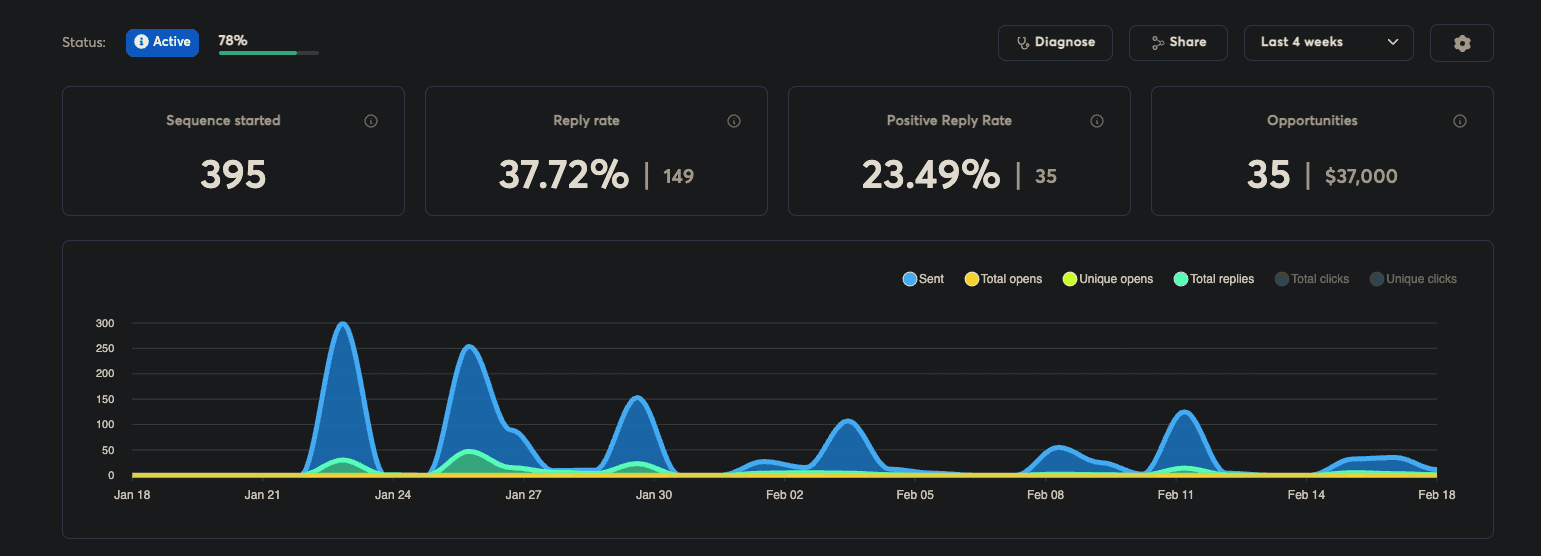
37.72% reply rate. 23.49% positive. 35 opportunities from 395 sequences.
The same play for a different client launched just two weeks ago:
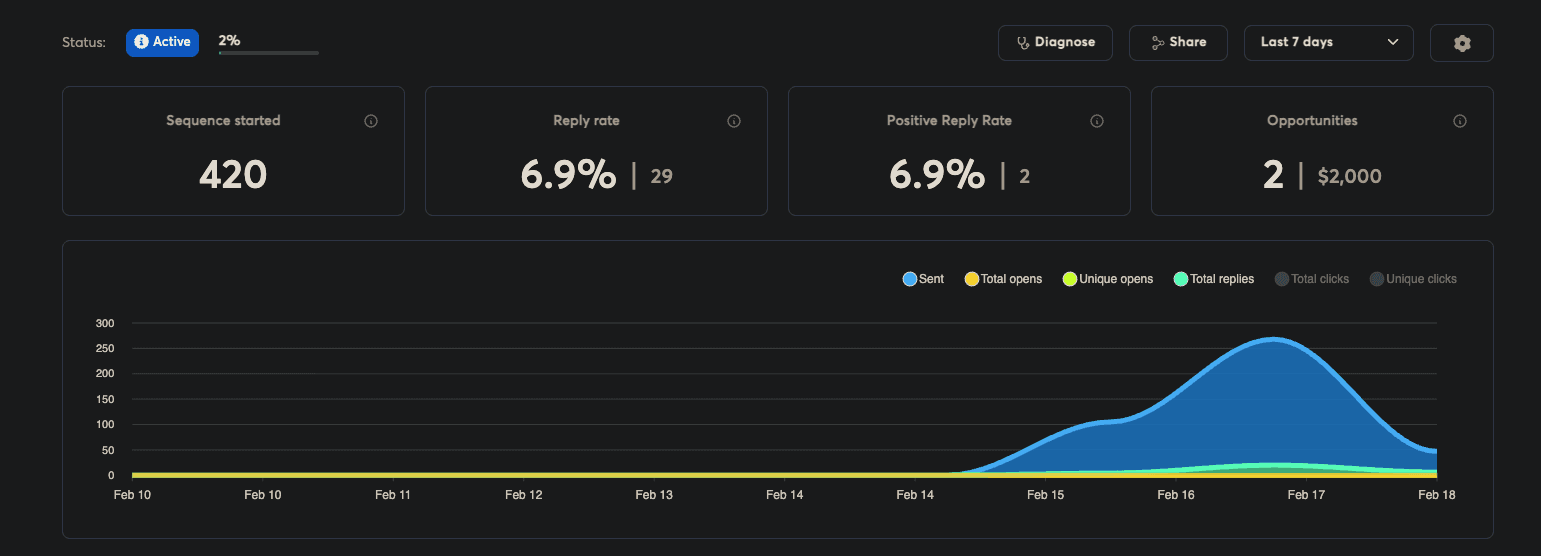
6.9% reply rate - proof that campaigns need ramp time. Deliverability warms up, targeting gets refined, and reply rates climb over weeks, not days. Do not panic if week one looks slow.
One UK construction recruitment agency running this play secured $104K in placement pipeline within their first 30 days. The key was not just detecting the job postings - it was matching candidates from their pool against those specific roles and leading with relevance.
Play 2: The Case Study Lookalike Play
The signal: Companies that match the firmographic profile of your best existing clients. Same industry, similar size, same growth stage, same geography.
How to detect it: Take your top 5 clients and feed them into Ocean.io to generate a list of lookalike companies. Enrich with Clay for company intelligence - firmographics, headcount, tech stack. Find decision-maker contacts with Prospeo for verified emails and phone numbers.
The messaging framework: Lead with social proof from a company they would recognize or relate to. The case study does the heavy lifting - you are not selling, you are showing what happened for someone like them.
The structure: "We helped a [industry] company with [X employees] reduce their time-to-fill from 60 days to 18. They had the same challenge you are likely facing - [pain point]. Happy to share the full breakdown."
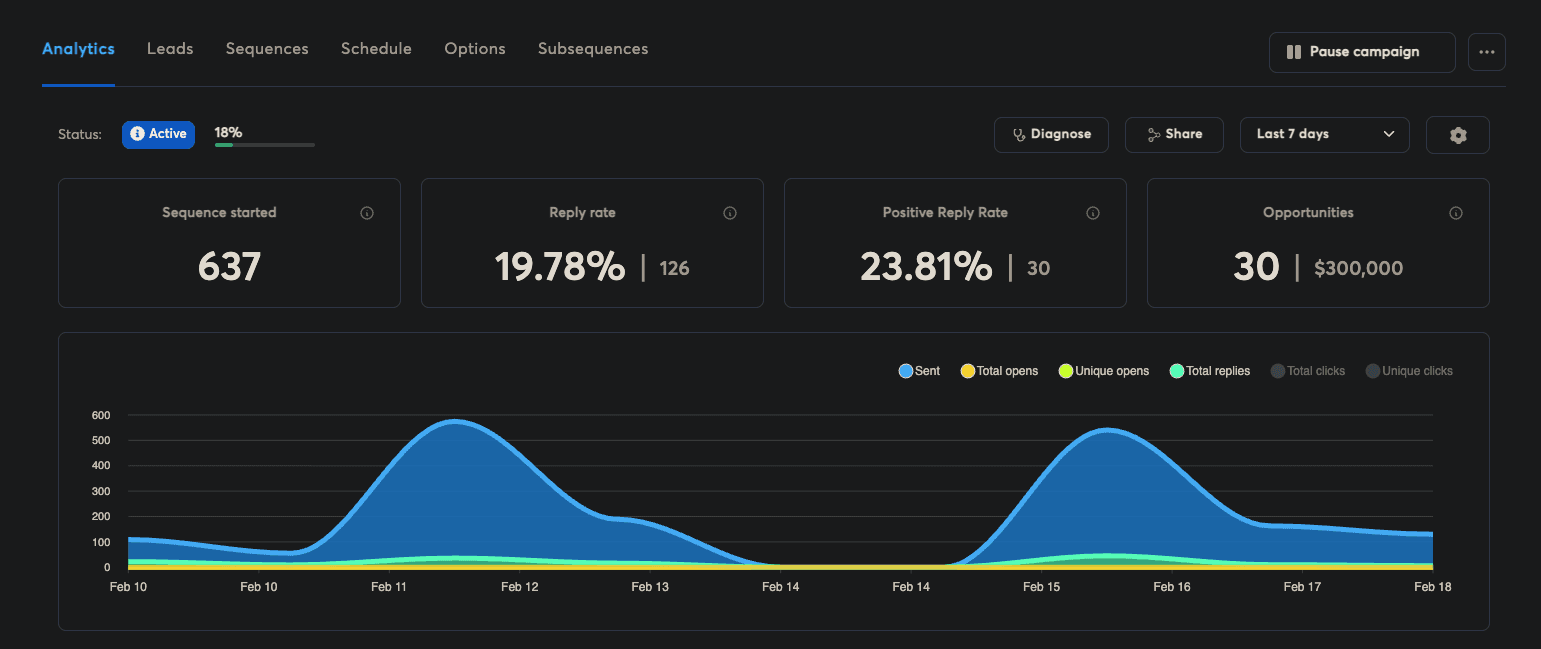
19.78% reply rate. 30 opportunities. $300,000 in pipeline from 637 sequences.
This is the highest pipeline generator of all 7 plays. The case study does not just build credibility - it gives the prospect a mental model for what working with you looks like. They can see themselves in the story.
Play 3: The New Decision Maker Play
The signal: People who joined a VP, Director, or Head of Talent role within the last 3-6 months. New leaders make changes. They restructure teams, bring in their own vendors, and build out headcount to prove their impact.
How to detect it: Clay can pull LinkedIn job change data and filter by title keywords (VP, Director, Head of) combined with tenure in role (less than 6 months). Enrich with Prospeo for verified emails.
The messaging framework: Reference their new role and the challenge they are likely facing. New leaders are open to conversations because they are actively looking for partners to help them deliver on their mandate.
The structure: "Congrats on the move to [Company]. New [Title]s typically inherit a backlog of open roles and a mandate to upgrade the team. If that sounds familiar, we specialize in [niche] and have placed [X] candidates in similar companies this year."
Timing matters here. Do not reach out in week one - new leaders spend the first 4-8 weeks assessing their team and building a plan. The sweet spot is 8-12 weeks after they start. That is when they are actively making hiring decisions and looking for recruitment partners.
This play works across all niches and is especially strong for enterprise and mid-market recruitment where hiring decisions are made by senior leaders, not HR generalists.
Play 4: The Growth Signal Play
The signal: Companies showing growth indicators that predict hiring surges - funding rounds, product launches, office expansions, and M&A activity.
How to detect it: Clay connects to funding databases (Crunchbase, PitchBook, and others through its 150+ data providers) and monitors headcount changes by department. Set up automated Clay tables that pull new funding events weekly. When a funding event fires, Clay enriches the company and routes it into your outreach workflow automatically.
The messaging framework: Reference the specific growth event and connect it to the hiring implication. Show them you understand what comes next - not just what happened.
The structure: "Congrats on the Series B. Companies at your stage typically add 30-50 hires in the next two quarters. We specialize in [role type] placements for post-Series B teams and can move fast when you are ready to scale."
The timing nuance most people miss: a company that just announced funding is NOT hiring tomorrow. The money needs allocating, the board needs to approve headcount plans, and leadership needs to align on priorities. The real hiring wave starts 8-12 weeks after the announcement. Reaching out the day of puts you in a pile with every other recruiter who set up a Crunchbase alert. Reaching out 10 weeks later puts you in a real conversation.
Seed-stage startups average 10 employees. Series A companies typically grow to 16-100. That growth has to come from somewhere - and it usually starts with a recruiter.
Play 5: The MPC Shot Play
The signal: Your best candidates ARE the signal. Instead of leading with "do you need a recruiter?", you lead with "we have someone you need to meet."
MPC stands for Most Placeable Candidate. It flips traditional BD completely - the candidate becomes the door opener.
How to detect it: Start in your ATS and identify your strongest, most placeable candidates. Use Clay to match their profile (skills, industry, seniority, tech stack) against target companies that would be a natural fit. Enrich and find the hiring manager's contact details.
Our hyreflow candidate-led-bd-campaign recipe runs this end to end: CV in, matching companies and hiring managers out, sequence drafted for your approval.
The messaging framework: Lead with the candidate profile (anonymized teaser), not a sales pitch. The prospect is responding because they are interested in the person, not your agency.
The structure: "We are working with a Senior DevOps engineer - 8 years experience, strong in [their exact tech stack], previously at [comparable company]. Based on your team structure, thought they might be relevant."
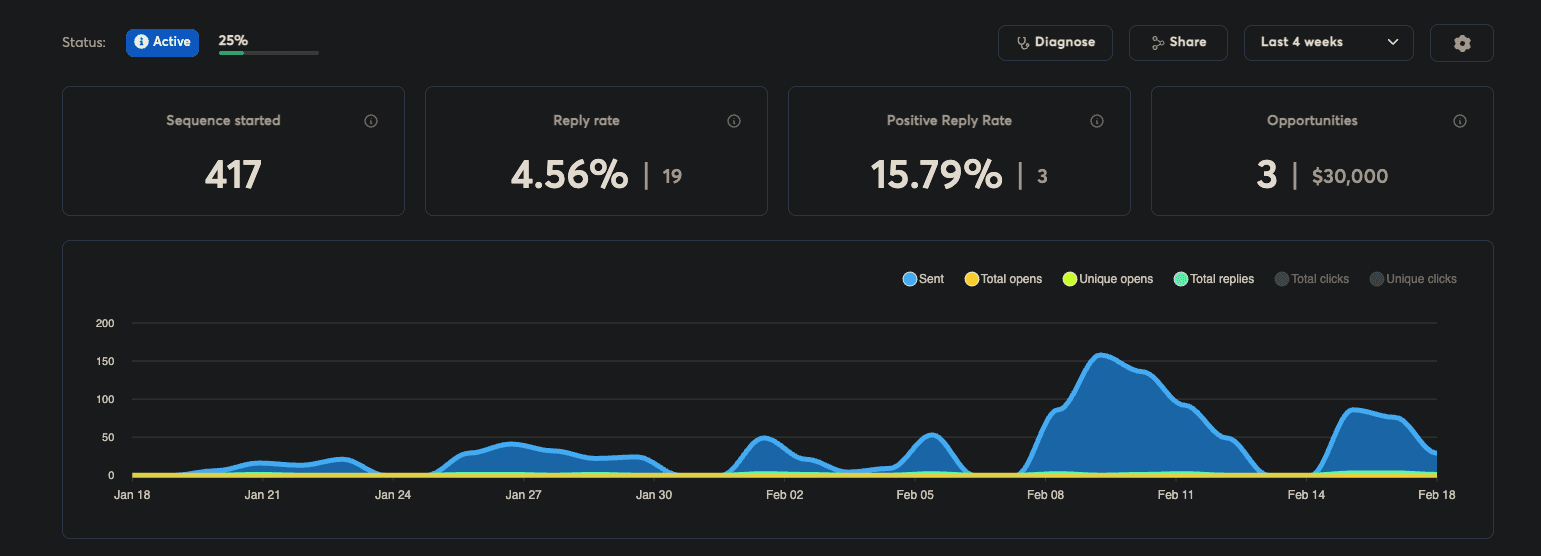
4.56% reply rate - the lowest of all 7 plays. But look at the value: $30,000 in pipeline from just 3 opportunities. That is $10,000 per opportunity. MPC replies come from serious buyers, not casual browsers.
“Most recruiters lead with "do you need a recruiter?" The best ones lead with "here is someone you need to meet." The candidate is the pitch.”
A NYC-based design recruitment agency used this play to generate $10K+ in retained search fees within 14 days of going live - from completely cold outreach. On the candidate marketing side, they achieved a 22.7% reply rate with 84.6% positive responses by applying the same 80/20 rule: surgical targeting, simple messaging.
Play 6: The Tenure and Turnover Play
The signal: Companies where average employee tenure in specific departments is below 2 years. Low tenure means high turnover. High turnover means constant hiring need. These companies are always looking for talent - even when they do not have active job postings.
How to detect it: Clay can pull LinkedIn profile data to calculate average tenure by department and track historical headcount changes. Filter for companies where average tenure in your target department (engineering, sales, operations) is below the industry benchmark. Cross-reference with headcount fluctuations - a company that had 50 engineers six months ago and has 42 now is churning.
The messaging framework: Reference the turnover pattern without being accusatory. Nobody wants to hear "your retention is terrible." Frame it as understanding their challenge and offering stability through better hiring.
The structure: "Noticed your [department] team has had some movement recently - that is common in [industry] right now. We specialize in placing [role type] candidates who stick. Average retention for our placements is [X months]."
This play is massively underrated. Almost nobody runs it because the data required manual LinkedIn research until recently. Clay changed that - it pulls tenure data through its enrichment providers and lets you build automated tables that flag high-turnover companies weekly. While your competitors are fighting over the same job posting signals, you are reaching companies before they even post the role - because you already know they will need to.
Play 7: The TA Overwhelm Play
The signal: Companies with too many open roles and too few recruiters. The math is simple: 5+ open positions per internal recruiter, roles posted for 30+ days, and a TA team that is clearly underwater.
How to detect it: Combine Clay (pull company headcount, identify TA team size by searching for recruiter/TA titles) with Apify (scrape career pages for total open role count). Calculate the jobs-per-recruiter ratio. Filter for companies where the ratio exceeds 5:1 and roles have been open for more than 30 days. Bonus: flag companies with zero identifiable internal TA team.
The messaging framework: Empathize with their overwhelm. Offer capacity relief, not a sales pitch.
The structure: "You have got [X] open roles across [departments] and [Y] people on your TA team - that is a heavy load. We can take the [specific role type] search off your plate and have qualified candidates in front of your hiring managers within two weeks."
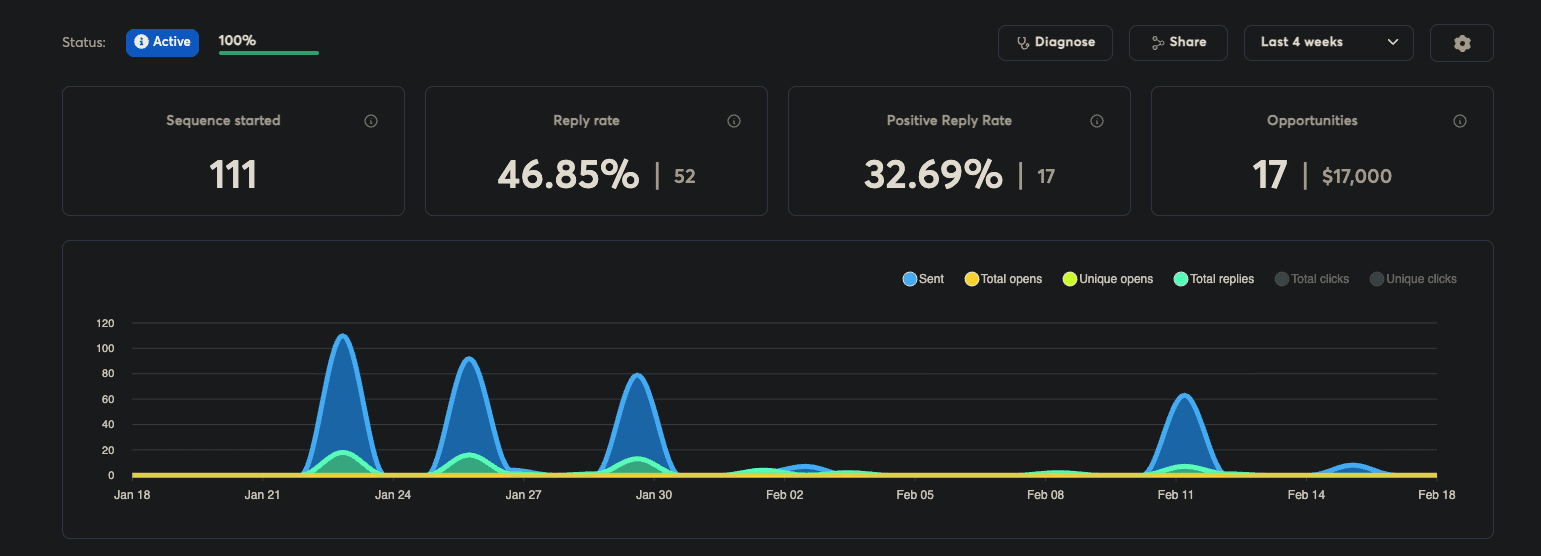
46.85% reply rate. The highest of all 7 plays. When you catch companies at their most overwhelmed, nearly half of them respond. 32.69% of those responses are positive.
A UK life science recruitment agency targeting overwhelmed companies in an ultra-niche market generated a $200K+ pipeline in 6 months. Their previous automation provider had failed because the approach was too generic. Custom signal detection for TA overwhelm in a niche market is where this play becomes unbeatable.
The Three Campaign Layers: Always-On, Nurture, and One-Off
Running individual plays is a start. But the agencies generating consistent pipeline combine them into three layers.
Layer 1: Always-On (Evergreen Signal Detection)
Plays like Open Jobs, TA Overwhelm, and Growth Signals should run 24/7 on autopilot. The system detects new signals in the market automatically and triggers outreach without manual intervention. This is your baseline BD engine - it never turns off.
Always-on campaigns keep you top of mind. When a company starts feeling hiring pain, your name is already in their inbox because your system detected the signal and reached out before they even started looking for a recruiter. This is the layer that compounds over time.
Layer 2: Nurture (Stay Warm With Value)
Not every prospect is ready to hire a recruiter today. Nurture campaigns keep you in front of potential clients by sharing genuine value - salary benchmarks for their niche, market hiring reports, resource hubs, case studies from their industry. No sales pitch. Just useful information that positions you as the expert.
When a nurtured prospect eventually needs to hire, you are the first name they think of. You have already demonstrated expertise without asking for anything in return. This layer plays the long game and it works.
Layer 3: One-Off Campaigns (Event-Driven Blasts)
Triggered by a specific moment. You close a great client and get an incredible case study? Find 1,000 lookalike companies and run the Case Study Lookalike Play as a targeted blast. You publish a salary benchmark report for your niche? Send it to every prospect in your TAM. You land a game-changing candidate? MPC Shot to 200 target companies.
One-off campaigns capitalize on momentum - high-impact, time-bound, not repeating. The Case Study Lookalike Play ($300K pipeline from 637 sequences) was exactly this: a one-off campaign triggered by a strong client result.
“Signal-based outreach alone is not enough. You need all three layers - always-on filling your pipeline, nurture keeping you warm, and one-off campaigns capitalizing on momentum when you have something worth shouting about.”
The Complete Tool Stack
Every play relies on the same core infrastructure. Here is how the tools map together:
| Layer | Tool | What It Does |
|---|---|---|
| Signal Detection | Apify | Scrapes job boards and career pages for live hiring signals |
| Lookalike Search | Ocean.io | Finds companies matching your best clients' profiles |
| Enrichment and Orchestration | Clay | Connects 150+ data providers, scores prospects, builds enriched profiles |
| Contact Finding | Prospeo | Triple-verified emails and phone numbers |
| Workflow Automation | n8n | Connects signals to enrichment to outreach automatically |
| Outreach Execution | Instantly / Lemlist | Multi-channel delivery with proper deliverability management |
Disclosure: hyreflow is our own product. If you would rather run these plays from Claude or ChatGPT than wire up six tools, hyreflow gives your agent Apify, Prospeo, Exa, Lemlist, Instantly and your CRM behind one login, with ready-made recipes for the Growth Signal play (funding-to-bd) and the MPC Shot play (candidate-led-bd-campaign). The agent builds the list and drafts the sequence, and nothing gets spent or sent until you approve it.
For solo recruiters and smaller agencies (1-5 people): If managing 5-6 separate tools sounds like overkill for your team size, SourceWhale is worth a look. It is built specifically for recruiters and combines sourcing, waterfall data enrichment across 10+ providers, multi-channel outreach (email, LinkedIn, InMail, calls, SMS, WhatsApp), an AI inbox agent, and a built-in CRM - all in one platform. Instead of stitching together Clay + Prospeo + Instantly + a separate CRM, you get one tool that handles the full workflow from prospect to placement. For larger agencies running high-volume plays, the modular stack above gives you more control and scalability.
You do not need every tool on day one. Start with Clay (orchestration) plus one signal source (Apify for job scraping), and an outreach tool to execute the campaigns.
For a detailed breakdown of each tool and how they connect, read our complete recruitment tech stack guide.
How to Get Started: Pick Your First Play
Do not try to run all 7 plays simultaneously. Pick 1-2 that match your niche and validate them first.
If you recruit for tech and startups: Start with the Growth Signal Play + Open Jobs Play. Funded companies with active postings are your highest-intent prospects.
If you are a niche or specialist recruiter: Start with the TA Overwhelm Play + Case Study Lookalike Play. Niche markets have smaller TAMs, so you need plays that maximize conversion rate, not volume.
If you have a strong candidate bench: Start with the MPC Shot Play + Open Jobs Play. Lead with candidates, not sales pitches.
The manual-first approach: Before automating anything, run your chosen play manually for 2 weeks. Set up Google Alerts. Check job boards daily. Build lists in a spreadsheet. If the signals convert to conversations, then invest in the automation stack.
Once validated, layer in always-on automation, add a nurture campaign, and start planning one-off blasts around your strongest client results.
The agencies generating consistent revenue with lean teams did not get there by sending more cold emails. They got there by running the right plays, at the right time, to the right companies. Now you have the playbook.
Frequently Asked Questions
Related Articles

Written by

Niklas Huetzen
CEO & Co-Founder
Niklas leads Automindz Solutions, helping recruitment agencies across the globe build AI-powered pipeline systems that deliver warm meetings on autopilot.
Connect on LinkedIn →Free Resources
Want more like this?
Our Resource Hub is packed with free guides, templates, and tools to help you build AI-powered recruitment pipelines.